Source silicone utensils for lids, molds, and spatulas
Compare 30 listings of silicone utensils including spatulas, lids, and molds from verified suppliers. View pricing, MOQs, and certifications like FDA and LFGB to find the right kitchen tools for your needs.
Key considerations
Products List


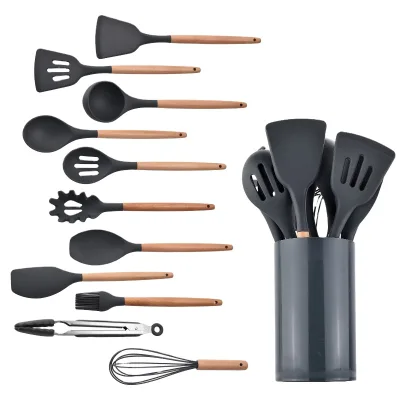


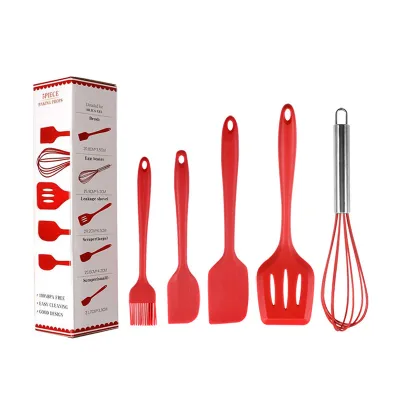


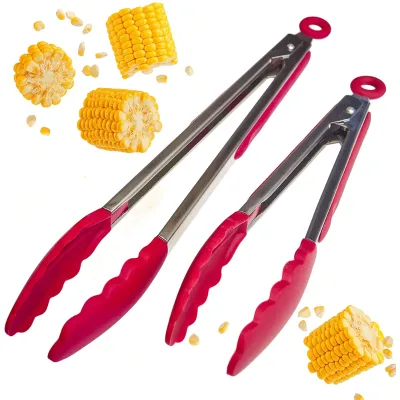


Comprehensive Sourcing Guide
Strategic Sourcing Guide for Silicone Utensils in the B2B Market
Understanding Material Composition and Functional Attributes
When sourcing silicone utensils, the primary focus must be on the material integrity and its specific functional applications. The core material identified in the market is silicone, often combined with wooden elements for specific grip requirements. Buyers must distinguish between 100% food-grade silicone and composite materials, as the latter may involve wooden handles or grips. The material properties are critical for determining heat resistance and durability. Specifications indicate a hardness range of 30-90 Shore A, which dictates the flexibility and firmness of the utensil. This range allows for products that can be either soft and pliable for delicate tasks or firm enough for scraping and mixing.
The application scope for these utensils is broad, covering use in microwave ovens, conventional ovens, dishwashers, and steamers. This versatility makes them suitable for a wide array of kitchen tasks. However, the specific configuration of the product varies significantly. Some listings describe items as spatula sets, while others identify them as cookie tools, cake molds, or cookware parts such as lids. The shape of the utensils is predominantly round, though sizes vary extensively. For instance, cookware lids are available in a comprehensive size range from 16cm to 36cm, accommodating various pot and pan diameters. Specific tool dimensions, such as those for molds or spatulas, are often listed as 24.5x6cm or 22.5x4.5cm, with weights ranging from 40g to 308g per piece.
| Product Attribute | Observed Specification | Functional Implication |
|---|---|---|
| Material | Silicone, Silicone + Wood | Determines heat resistance and tactile feel; wood adds ergonomic grip. |
| Hardness | 30-90 Shore A | Defines flexibility; lower values for soft molds, higher for rigid scrapers. |
| Application | Microwave, Oven, Dishwasher, Steamer | Confirms thermal stability and chemical resistance for cleaning. |
| Shape | Round | Standardized for mixing bowls and circular cookware compatibility. |
| Weight | 40g to 308g/PC | Indicates density and perceived quality; heavier items often imply thicker walls. |
Buyers should verify that the "100% food grade silicone" claim is backed by specific documentation rather than marketing language. The presence of wooden hand grips requires additional verification regarding the type of wood and the bonding method to ensure it does not degrade under high heat or moisture.
Compliance, Certification, and Safety Standards
In the B2B procurement of food-contact products, regulatory compliance is non-negotiable. The market data highlights several key certifications that serve as indicators of safety and quality. Products are frequently listed with FDA, CE/EU, and LFGB certifications. These standards represent the primary regulatory frameworks for food safety in the United States, the European Union, and Germany respectively. The LFGB standard is particularly rigorous regarding migration limits of substances from the material into food.
It is essential to note that while these certifications are listed, they are not automatically guaranteed for every unit in a bulk order. Buyers must treat these as supplier claims that require validation through current, batch-specific test reports. The "customized" standard mentioned in product data suggests that some manufacturers may tailor their compliance documentation to specific regional requirements. Therefore, a procurement strategy must include a request for valid, up-to-date certificates of analysis (CoA) and test reports from accredited laboratories.
The absence of a universal ISO 9001 certification in the high-confidence data suggests that quality management systems may vary between suppliers. While ISO 9001 is a common industry standard for quality assurance, its absence in the provided facts means buyers should not assume its presence without explicit confirmation. Instead, the focus should remain on the specific food-contact certifications (FDA, CE, LFGB) that directly impact product safety. Buyers must also verify the "Eco-Friendly" attribute claims, ensuring they align with the material composition and manufacturing processes used.
Cost Drivers and Pricing Dynamics
The pricing structure for silicone utensils is influenced by a complex interplay of material costs, customization levels, and order volume. The observed price range in the market spans from $0.25 to $11.67 USD per unit. This wide variance is primarily driven by the complexity of the product design, the quantity ordered, and the inclusion of additional features such as custom packaging or branding.
Order Volume is a significant cost driver. The Minimum Order Quantity (MOQ) varies drastically, ranging from as low as 2 pieces to as high as 3,000 pieces. Some specific product lines, such as cookie tools or cake molds, have MOQs set at 1,500 or 2,000 pieces. This indicates that smaller buyers may face higher per-unit costs or limited product availability. Conversely, larger orders benefit from economies of scale, particularly when utilizing standard molds and packaging.
Customization is another major factor affecting cost. The market data confirms that OEM and ODM services are available, with options for printing, debossing, or embossing logos. Customized packaging, such as colorful boxes or specific polybag arrangements, also adds to the unit cost. The "customized" standard and "Available" customization attributes suggest that buyers can tailor the product to their brand, but this flexibility comes with a premium. Additionally, the inclusion of wooden handles or specific color variations (Colorful) may influence the final price point.
Typical Applications and Product Variations
Silicone utensils serve diverse functions across the kitchen, ranging from cooking tools to storage accessories. The product data reveals a clear segmentation based on application. One major category includes cookware parts, specifically lids, which are designed to fit pots and pans of various sizes. These lids are often described as having a "Glass Kitchenware Lid" function, implying they are designed to seal and retain heat effectively.
Another significant category involves baking and preparation tools. This includes spatula sets, cookie tools, and cake molds. The dimensions of these items are precise, with molds often measuring around 22.5x4.5cm or 177-192mm in length. The weight of these items, ranging from 40g to 308g, suggests a variation in wall thickness and density, which impacts their durability and heat retention.
The versatility of these products is further enhanced by their compatibility with various cooking methods. The ability to withstand temperatures in microwaves, ovens, and steamers makes them ideal for modern, multi-functional kitchens. Furthermore, their dishwasher-safe nature simplifies maintenance, a key selling point for both retail and hospitality sectors. The "Non Stick Cookware Set Silicone Kitchen Gadgets Utensils" description highlights the integration of silicone into broader cookware ecosystems, suggesting that these utensils are often sold as part of a complete kitchen solution rather than as isolated items.
Supplier Evaluation and Customization Capabilities
Evaluating a supplier for silicone utensils requires a deep dive into their production capabilities and flexibility. The data indicates that OEM and ODM services are welcome, allowing buyers to create branded products. The availability of customization extends to the product itself, with options for different shapes, sizes, and colors. The "Customized" attribute is listed alongside "Non-Customized," indicating that suppliers offer both standard catalog items and bespoke solutions.
Logistics and lead times are critical components of supplier evaluation. The sample lead time is reported as "Within 3 Days," which is a strong indicator of a responsive supply chain for prototyping. However, mass production lead times are tied to payment terms, specifically "30% T/T Deposit, The Balance Against The Copy of B." This suggests that production scheduling is contingent on financial milestones. Buyers should clarify the exact duration of the mass production phase, as the provided data does not specify a fixed number of days for bulk orders.
Packaging is another area where supplier flexibility is evident. Options include individual polybags, bubble bags, PVC pet bags, or OPP bags. Some suppliers offer customized packing, such as colorful boxes, which can enhance the retail presentation. The standard packing for some items is 8 pieces per carton or 40-100 pieces per carton, depending on the product type. Buyers must ensure that the packaging protects the silicone from deformation during transit, especially for items with complex shapes or thin walls.
Quality Control and Long-Term Procurement Strategy
Establishing a robust quality control (QC) protocol is essential for maintaining product integrity in the silicone utensil market. Given the wide range of hardness (30-90 Shore A) and the potential for material variations, buyers should implement strict incoming inspection criteria. This includes verifying the material composition to ensure it meets the "100% food grade silicone" specification. Visual inspections should check for uniformity in color, absence of defects, and proper bonding of wooden handles if applicable.
Long-term procurement considerations involve building a relationship with suppliers who can consistently meet quality standards and delivery schedules. The variability in MOQs suggests that buyers should plan their inventory carefully to avoid stockouts or excessive overstocking. For brands requiring consistent branding, establishing a long-term contract with a supplier who offers stable pricing and reliable lead times is advisable.
Buyers should also consider the environmental impact of their procurement. The "Eco-Friendly" attribute is a growing concern in the market. While the material itself is silicone, which is durable and reusable, the packaging materials (polybags, bubble bags) should be evaluated for their sustainability. Opting for suppliers who offer recyclable packaging or reduced material usage can align with corporate sustainability goals.
Finally, the diversity of product models, such as Spatula Set-081L, CY-G, YK-26, and M1, indicates a vast array of options. Buyers should maintain a clear specification sheet for each product to ensure consistency across orders. Regular communication with the supplier regarding any changes in material standards or production processes is vital to mitigate risks associated with supply chain disruptions. By focusing on these strategic areas, buyers can secure a reliable supply of high-quality silicone utensils that meet both functional and regulatory requirements.
FAQs
What certifications do silicone utensils typically have?
Products often list FDA, CE/EU, and LFGB certifications for food safety. Buyers must verify these claims with current batch-specific test reports rather than assuming universal compliance for every unit in a bulk order.
How flexible is the hardness of silicone utensils?
The hardness range is typically 30 to 90 Shore A, defining flexibility for different tasks. Lower values suit soft molds while higher values provide firmness for scraping and mixing applications in the kitchen.
Can I order silicone utensils with custom packaging?
Yes, customization is available for packaging options like polybags, bubble bags, or colorful boxes. Suppliers also offer logo printing, debossing, or embossing to tailor the product to your brand requirements.
What is the minimum order quantity for these items?
MOQs vary significantly from 2 pieces up to 3,000 depending on the specific product line. Some cookie tools or cake molds may require 1,500 or 2,000 pieces, affecting per-unit costs for smaller buyers.
Which materials are used for the handles of these utensils?
Materials include 100% food grade silicone or a combination of silicone and wood. Wooden grips add an ergonomic feel but require verification of the wood type and bonding method for heat resistance.
How long does it take to get samples?
Sample lead time is within 3 days for most suppliers. Mass production lead times depend on payment terms, typically requiring a 30% deposit before the balance is paid against shipping documents.